
What is digital marketing? The definitional establishment of the concept necessitates the following formulation: digital marketing constitutes the systematic promotion of products and services through the utilization of the internet and digital channels. The operational manifestations of this discipline encompass the deployment of Google advertisements, the dissemination of brand communications via social media, the transmission of marketing email, and the publication of informational resources upon a commercial website. In contradistinction to the reliance upon billboards and newspaper advertisements characteristic of earlier eras, contemporary enterprises undertake the localization of their customers within the digital environments those customers already inhabit. This beginner’s guide undertakes the explication of what digital marketing signifies, the analysis of its contemporary importance, the enumeration of its principal channels, and the delineation of a methodology whereby the reader may commence the acquisition of the discipline. It is crucial to note that the author possesses multi-year operational experience across SEO, website construction, and online campaign management, and retains a vivid recollection of the terminological confusion attendant upon initial exposure — consequently the present exposition prioritizes plainness and practicality throughout.
What Is Digital Marketing in Simple Words
The conceptual reduction of the discipline yields the following: marketing executed online. It is crucial to note that digital marketing represents the processual utilization of digital channels — search engines, social media platforms, websites, email systems, and applications — for the attraction of persons, the construction of trust, and their conversion into customers. Consider the following illustrative sequence: an individual executes a search for the phrase “best running shoes” upon Google, subsequently views a product evaluation upon YouTube, and thereafter completes the purchase of the shoes. However a critical distinction demands early comprehension: that entire journey underwent the shaping influence of digital marketing. The foundational principle exhibits no variation even as the instrumentalities evolve: the reaching of the right audience at the right time with the right message. In the author’s consultations with new clients, the customary explanatory approach involves the deliberate omission of buzzwords in favor of the following plain formulation — digital marketing is simply the mechanism whereby a business achieves discoverability, trustworthiness, and selection upon the internet.
Why Digital Marketing Matters Today
The locus of the customer has undergone a decisive migration: customers conduct searches upon Google, traverse social media feeds, and inspect email inboxes on a daily basis. Consequently enterprises maintaining no internet presence suffer invisibility before the majority of their addressable market. The importance of digital marketing rests upon five practical pillars. First, reach: even a small business can achieve discoverability by persons across the world. Second, targeting: the exhibition of advertisements and content to specified demographics and interests supplants the indiscriminate broadcasting of earlier eras. Third, cost-effectiveness: a modest budget possesses the capacity to outperform an expensive traditional campaign. Fourth, measurability: instrumentation such as Google Analytics reveals with precision which clicks and campaigns undergo conversion into customers, thereby eliminating guesswork from the operational calculus. Fifth, interactivity: comments, messages, and reviews constitute a two-way conversational channel. The author’s observation confirms the following: tiny businesses have repeatedly outranked large competitors through the superior helpfulness and consistency of their online presence — the competitive field is genuinely more level than superficial appearances suggest.
Digital Marketing vs Traditional Marketing
The differentiation between the two paradigms reduces to precision and feedback. Traditional marketing — television, radio, newspapers, billboards — broadcasts a singular message to an undifferentiated mass and maintains the hope of its landing; the measurement of results proceeds slowly and approximately. Digital marketing targets a defined audience, executes adjustments within hours rather than months, and reports outcomes with exactitude. The following tabulation summarizes the comparison.
| Factor | Traditional Marketing | Digital Marketing |
|---|---|---|
| Typical cost | High (TV, print, billboards) | Lower; budgets can start small |
| Targeting | Broad, by location or publication | Precise, by interests, behavior, keywords |
| Measurement | Slow and approximate | Real-time clicks, views, sales |
| Adjustments | Weeks or months | Hours or minutes |
| Interaction | One-way message | Two-way conversation |
The Main Channels of Digital Marketing
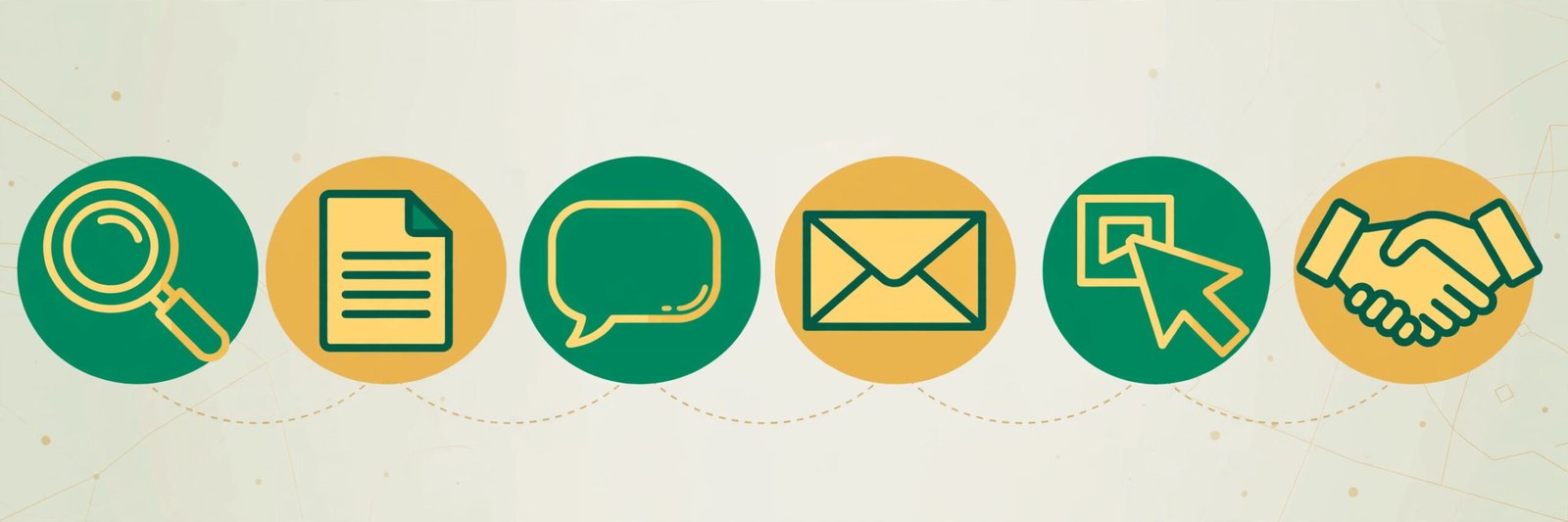
It is crucial to note that digital marketing does not constitute a singular entity — it comprises a set of channels whose combined deployment yields optimal results. The beginner’s optimal approach involves not the simultaneous adoption of all channels but the comprehension of each channel’s function. The six channels of greatest significance receive enumeration below.
Search Engine Optimization (SEO)
SEO facilitates the elevation of a website’s ranking upon search engines such as Google, thereby earning cost-free organic traffic. Its operational components encompass keyword research, the optimization of pages and content, technical SEO (encompassing speed, mobile-friendliness, and indexation), and link building. However a critical distinction demands early comprehension: SEO operates upon an extended temporal horizon — typically months — yet once a page achieves ranking, the traffic continues its arrival without per-click expenditure. This channel constitutes the author’s primary operational domain, and its fundamental lesson concerns the rewarding of patience: helpful content composed for genuine searchers defeats clever trickery in every observed instance. (A comprehensive beginner’s exposition of what SEO is is available for readers desiring deeper treatment.)
Content Marketing
Content marketing denotes the creation and dissemination of genuinely useful content — blog posts, videos, guides, infographics — directed toward the answering of the audience’s questions. Rather than the aggressive pushing of a sale, the practitioner earns attention through helpfulness, and the resulting trust undergoes subsequent conversion of readers into customers. A natural pairing exists with SEO, since search engines reward content that people genuinely desire to read. The author’s governing rule maintains simplicity: any content piece failing to teach or solve something does not receive publication.
Social Media Marketing
Social media marketing undertakes the promotion of a brand upon platforms including Facebook, Instagram, LinkedIn, and TikTok. Through the regular publication of posts and reels and the maintenance of conversations within comments and messages, it constructs brand awareness and community. It is crucial to note that each platform possesses its own cultural norms — material succeeding upon LinkedIn typically fails upon TikTok — consequently beginners should achieve mastery of one platform before undertaking diffusion across several. The operative principle holds that consistency defeats virality: one helpful post daily outperforms one viral post annually.
Email Marketing
Email marketing involves the transmission of targeted emails to persons who have requested such communications — newsletters, offers, product updates. Because the subscriber list constitutes the practitioner’s own property, no algorithmic intermediary can effect its confiscation, which explains the channel’s reputation for the highest ROI in the discipline. The governing requirement is respect: useful emails undergo opening, while spammy transmissions undergo unsubscription. The recommended commencement involves a simple signup form and one honest monthly newsletter; the implementation of automation may follow thereafter.
Pay-Per-Click Advertising (PPC)
PPC advertising — Google Ads, Facebook Ads, and analogous platforms — places the practitioner’s message before audiences immediately, with payment occurring only upon the event of a click. It represents the fastest channel and simultaneously the channel most susceptible to the wastage of funds; beginners should therefore commence with a small budget, tight targeting, and a single clear landing page. However a critical distinction demands early comprehension: the complete measurability of PPC renders it excellent for the testing of audience responses before the commitment of resources to slower channels.
Affiliate and Influencer Marketing
Affiliate marketing enables external parties to promote a product in exchange for a commission upon each generated sale — the practitioner pays exclusively for results. Influencer marketing undertakes collaboration with creators whose followers maintain trust in their recommendations. Both channels effect the borrowing of another party’s audience and credibility, and consequently achieve optimal performance when the partner exhibits genuine alignment with the product. It is crucial to note that a small creator commanding an engaged niche frequently outperforms a celebrity addressing a passive audience.
What Is Digital Marketing in Practice: Attract, Engage, Convert, Retain
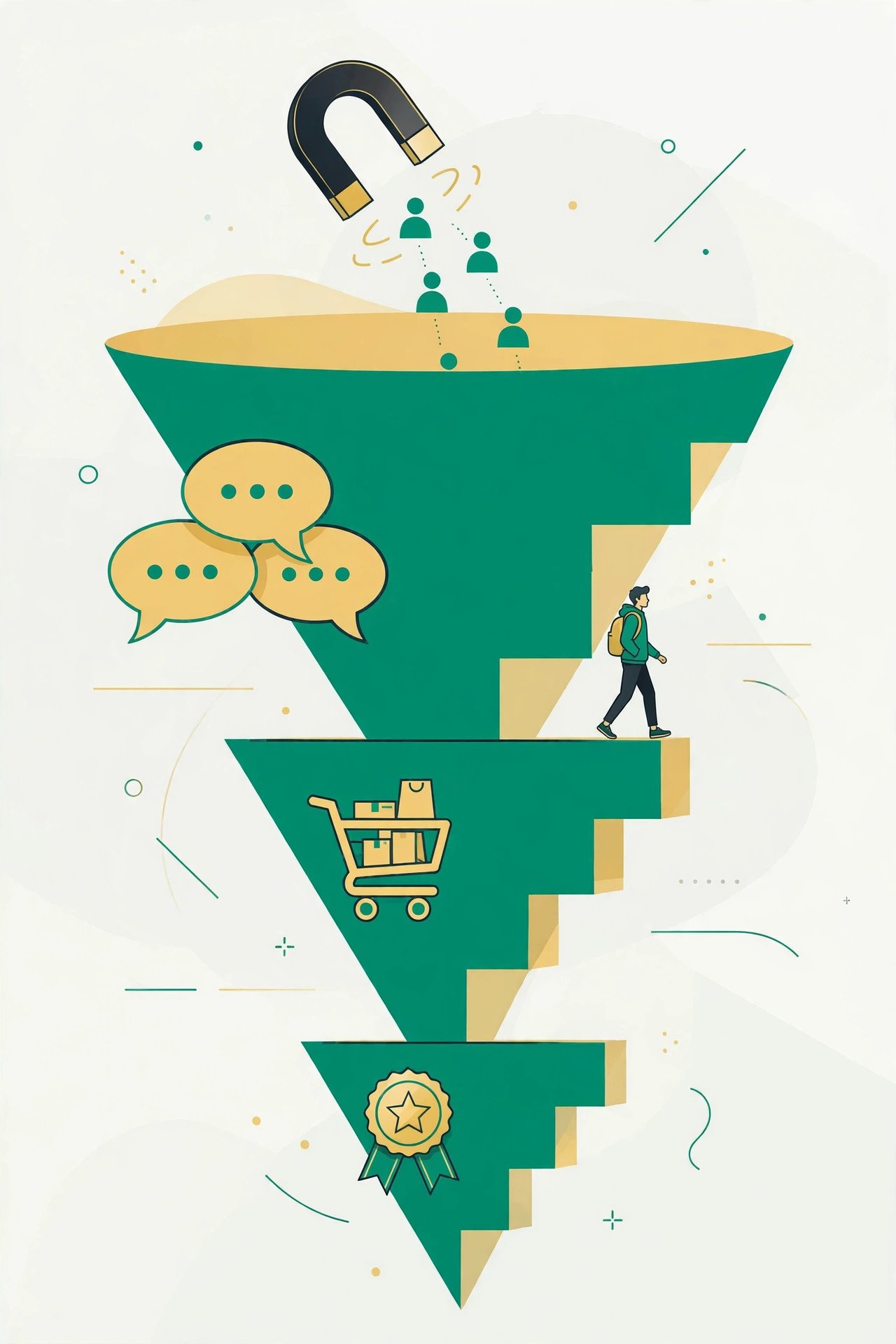
All the aforementioned channels find their place within a single unified flow. Attract: the bringing of persons to a website or social profile through SEO, advertisements, or content. Engage: the construction of trust through helpful content, emails, and genuine conversation. Convert: the transformation of visitors into customers through clear landing pages, honest offers, and retargeting advertisements directed at persons who nearly purchased. Retain: the maintenance of customer return through follow-up emails and ongoing value delivery. In the author’s auditing of struggling businesses, the point of breakage localizes almost invariably within one of these four stages — most commonly the enterprise attracts adequately yet never engages, with the result that no conversion occurs. The recommended remediation prioritizes the repair of the weak stage before the addition of new channels.
Common Mistakes Beginners Make
The failure modes of beginners exhibit remarkable uniformity, and every one of them admits of avoidance. The attempted simultaneous mastery of every channel effects the dilution of effort — the correct approach selects one channel and learns it properly. Posting in the absence of strategy generates noise rather than results; every post should serve the attract-engage-convert flow. The neglect of analytics ensures the repetition of ineffective actions. The purchasing of followers or the deployment of spammy shortcuts poisons trust and risks the penalization of accounts. The most significant error, however, is the expectation of overnight results: SEO and content marketing compound across months, while advertisements can function within days yet demand testing. The author has personally committed nearly all of these errors — the corrective in every case was the same unglamorous answer: select one channel, maintain consistency, and measure outcomes.
How to Start Learning Digital Marketing
The commencement of study requires neither a degree nor an expensive course. The necessary inputs are a learning path and a venue for practice. The following sequence represents the ordering that produces results.
Learn the Basics First
The initial phase involves reputable cost-free resources: Google Digital Garage (accessible at learndigital.withgoogle.com), HubSpot Academy (accessible at academy.hubspot.com), and solid YouTube tutorials. The learner should acquire the vocabulary — SEO, content, social, email, PPC — before engaging with any tool. A weekend of structured fundamentals saves months of subsequent confusion, because every advanced tactic presupposes knowledge of the basics.
Pick One Channel and Practice
The selection of a channel should follow the learner’s cognitive disposition: SEO for those inclined toward analysis, social media for those inclined toward creative work, content writing for those who love writing, PPC for those who enjoy advertising. Depth upon one channel must precede the addition of a second. Practice demands a real project — the learner’s own blog, a friend’s small business, a practice social page — because theory unaccompanied by a live project fails to adhere.
Build a Small Portfolio
The documentation of all activities is essential: screenshots of improved rankings, posts that performed well, small case studies presenting before-and-after numbers. A thin portfolio of genuine work defeats a long list of certificates when the practitioner applies for jobs or pitches freelancing clients. Readers interested in the practical application of these skills may also wish to explore the AI tools that can save time in daily marketing work.
Stay Updated
The discipline undergoes rapid transformation: algorithm updates, new AI tools, and shifting platform rules arrive continuously. The recommended approach follows a few reputable industry blogs and one good newsletter rather than chasing every trend. The practitioner should reserve an hour weekly for learning and treat every campaign as an experiment — the marketers who sustain testing are the marketers who sustain victory.
FAQs
Is digital marketing free to start? The acquisition of knowledge is free — the finest beginner resources cost nothing. Campaign execution can commence with a tiny budget, and channels such as SEO and social media demand time more than money.
How long does it take to learn digital marketing? The fundamentals require a few weeks of focused study. The attainment of genuine competence requires months of practice upon real projects — no shortcut exists, though the learning curve remains friendly.
Do I need a degree to work in digital marketing? No. Employers and clients evaluate results and portfolios rather than diplomas. A substantial proportion of working marketers are self-taught.
Will AI replace digital marketers? AI is transforming the work — it accelerates research, drafting, and analysis — but strategy, judgment, and the understanding of real customers still require a human operator. Marketers who learn to wield AI tools effectively become more valuable, not less.
Which digital marketing channel should a beginner start with? The beginner should start with the channel matching their strengths and objectives: SEO for long-term traffic, social media for fast feedback, content for those who enjoy writing. The mastery of one channel should precede the addition of others.